Jodl Gayatin, black-and-white portrait, smiling at the camera at dusk in Porto

Working harder isn’t working.

I help growing teams in BPO, manufacturing, services and healthcare find the real cause of the chaos, then redesign the system so work runs calmly.

Book the Diagnosis

Free · 30–60 minutes · Online or in Cebu

Certified
Lean Six Sigma Master Black Belt
Experience
20+ years improving how work gets done
Sectors
Manufacturing · BPO · Academe · NGOs
Programmes in
India · Thailand · Vietnam · Indonesia
( 01 )

Same fires. Every month.

Everyone’s busy. Nothing’s fixed.

The same errors come back every month in slightly different clothes. Meetings exist to fix other meetings. Your best people spend their mornings on rework and their afternoons explaining it.

Nobody is lazy. Everybody is tired. You’ve tried more effort, more checks, more people on the problem. The work still arrives late, wrong, or twice.

Your team isn’t short on effort. It’s short on a system that lets all that effort land.

( 02 )

It’s not your people.

The part nobody says out loud

I’ve done this work in manufacturing, in BPO, in academe and in international development programmes, and the pattern never changes. Systems rarely get designed. They grow. A workaround here, a checklist there, a spreadsheet only one person understands, until the workaround is the process.

So when something breaks, the room asks “Who made the mistake?” The better question is “What in the process allowed it?” One question looks for someone to blame. The other looks for something to fix.

Most problems come from systems nobody ever designed on purpose, not from a lack of effort or intelligence.


( 03 )

The symptoms you’ve normalised

Five symptoms worth noticing

None of these is a crisis on its own. That’s exactly why they last.

  • You can’t take a week off without something breaking, or your phone lighting up.
  • The same error appears in every monthly report, and everyone has a different theory about why.
  • Your strongest people have quietly become your rework department.
  • Growth is coming, and you suspect today’s way of working won’t survive twice the volume.
  • You’ve paid for training before. The certificates are framed. The habits didn’t stay.

If two or more of these sound familiar, the next step is a clear look at the system, not a team that tries harder.

See if this is you

Calm isn’t a personality trait. It’s a design decision.

Jodl Gayatin, seen from behind, sitting on a rock and looking toward the Montserrat mountains

And it starts with a proper diagnosis.

( 04 )

The Diagnosis

No pitch. Just the root cause.

Most consultants open with a proposal. I’d rather open with a question: what is actually going on?

The Diagnosis is a working session on one problem that keeps coming back. We trace it to where it really starts. Afterwards you get a short written summary of what I saw and what I’d do, whether we work together or not.

What we’ll cover:

  • Where the work breaksWe walk one process end to end and find the exact step where time, quality or patience starts to leak.
  • The root cause, not the symptomWe separate what you’re seeing from what’s causing it, so you stop treating the same fever every month.
  • What “good” means to your customerWe pin down what the people you serve actually care about, because quality you can’t define, you can’t deliver.
  • Two or three quick winsSmall, specific changes your team can try next week. No budget, no project charter, no permission slip.
  • The honest next stepA project, a training, a few conversations, or nothing at all. Sometimes the right answer is that you don’t need me.
  • 30–60 minutes
  • Online, or in person in Cebu
  • Free
  • Written summary within 48 hours

One focused conversation about the real cause will save you more time than another quarter of fixing the symptoms.

( 05 )

How the fires stop

Three steps, always in this order

The tools come from Lean Six Sigma: process mapping, root-cause analysis, and DMAIC when a problem deserves the full treatment. You won’t need to learn the vocabulary. You’ll notice the results: fewer surprises, shorter queues, and meetings that end with a decision.

01

Clarify your work

Untangle the problem before anyone touches it. We map how the work really flows, not how the SOP says it flows, and agree on the few things that actually matter.

You get: one shared picture of the problem, and three real priorities instead of twelve urgent ones.

02

Redesign how you work

Build simple, human systems around those priorities. Fewer handoffs, fewer meetings, less rework. Every change is tested small, measured honestly, and kept only if it works.

You get: a process that holds up in a bad week, not just on a good day.

03

Build independent thinkers

Teach your people to solve the next problem without me. Practical thinking tools, no fluff, built into the work they already do.

You get: a team that asks “what in the process allowed this?” before you have to.

The best improvement is the one your team can repeat on its own, long after I’ve packed my bag.

See how I work with teams

( 06 )

Rules I don’t break

Diagnosis. Calm. Independence.

1

Diagnose before prescribing

A training course is not a diagnosis. Before I recommend anything, I want to see how the work actually flows, where it breaks and why. Training happens when training is the answer, not because it’s the easiest thing to sell. Sometimes the fix is a two-day workshop. Sometimes it’s one redesigned form.

2

Calm over heroics

A team that runs on heroics is one sick day away from a crisis. I’d rather design a process that works on an ordinary Tuesday than applaud the people who keep rescuing a broken one. Calm and ambition go together once the system supports the work.

3

Independence over dependency

My job is to make myself unnecessary. No retainers that live on confusion, no binders only I can read. Every engagement ends with your people owning the method, the measures and the next improvement. If you call me again in a year, I’d like it to be about a new problem, not the old one.

No 200-slide decks. No belts for the sake of belts. Just the root cause, fixed, and a team that knows how to keep it fixed.

( 07 )

The engineer in the room

Who you’d be working with

I’m Jodl Gayatin. I work with leaders whose teams are working hard inside a system that’s working against them.

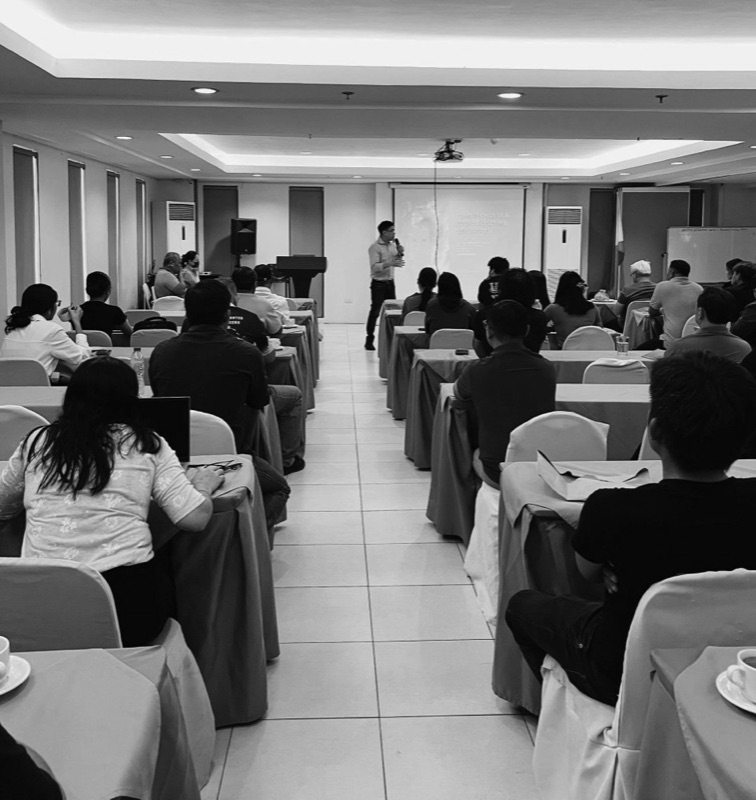
Jodl Gayatin leading a training session for a room of seated participants
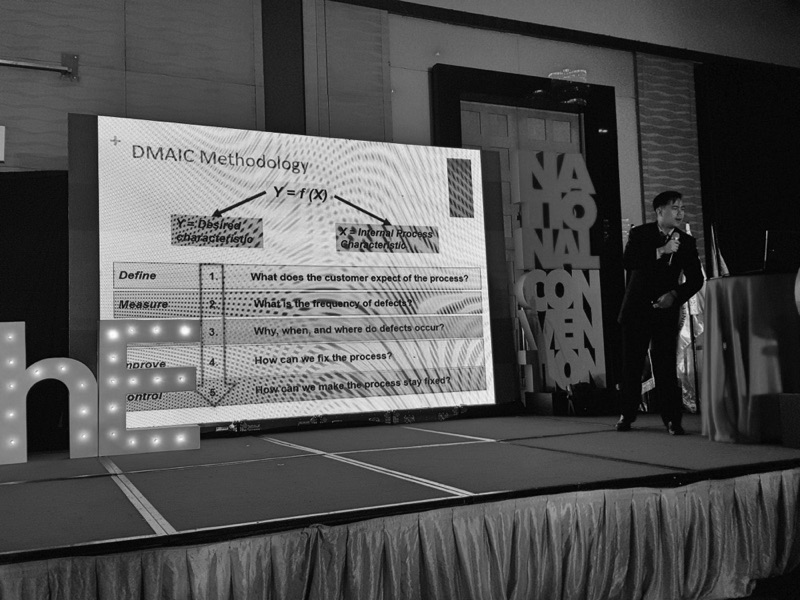
Jodl Gayatin presenting the DMAIC methodology at the PIChE National Convention
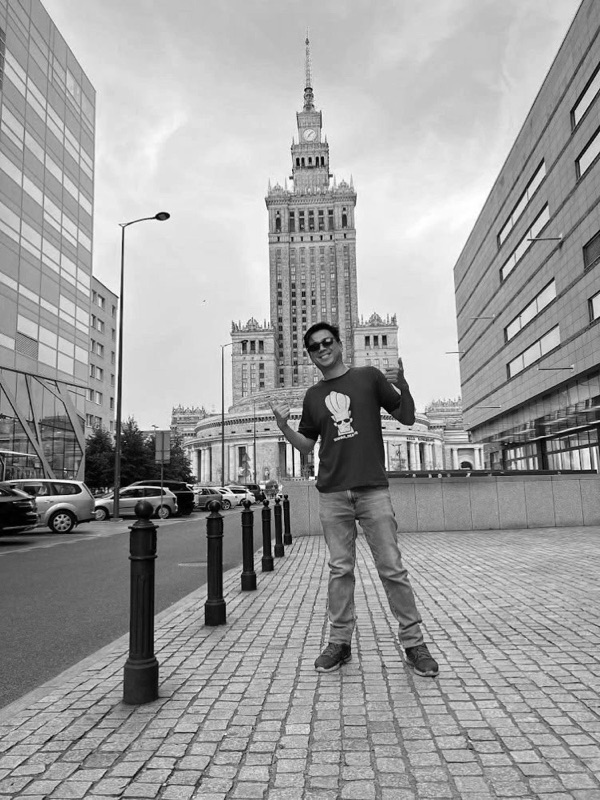
Jodl Gayatin giving thumbs up in front of the Palace of Culture and Science in Warsaw

I trained as a chemical engineer and have spent 20+ years improving how work gets done. I’m based in Cebu and work with teams in person or remotely, wherever they are.

  • Lean Six Sigma Master Black Belt
  • Chemical Engineer
  • MBA, UCAM, Murcia, Spain
  • Manufacturing · BPO · Academe · NGOs
  • India · Thailand · Vietnam · Indonesia · Philippines
  • Slowmad · Eclipse chaser · DJ

My approach

I use Lean Six Sigma the way a good doctor uses a lab: to confirm what’s wrong before anyone starts treatment. The statistics stay in my notebook. What you see is a clear picture, a few clear decisions, and a team that finally understands its own process.

Engineering taught me why systems fail. Years on the road taught me how to build ones that run without me.

Why? A five-question self-test

Five questions. Answer honestly. Good root-cause work usually takes about five whys anyway.

  1. Are you tired of solving the same problem twice?
  2. Would you rather fix the process than find someone to blame?
  3. Will you look at how the work really happens, not how the SOP says it does?
  4. Do you want your team to own the fix, not rent it from a consultant?
  5. Are you ready to hear that the answer might be simpler than you think?

If you said yes, even quietly, this work was built for you.

( 08 )

What happens next

No automation. No assistants. Just me.

No sales team, no calendar maze, no form that disappears into a void. Here is exactly what happens after you reach out.

  1. You reach out

    Tell me in a few lines what keeps breaking. Use the form or email. Don’t polish it. Rough notes are usually more honest.

  2. I reply personally

    Within 24 hours, from me, not an assistant. If it sounds like a fit, I’ll suggest times and send two or three questions to think about first.

  3. The Diagnosis

    30 to 60 minutes, online or in person in Cebu. We trace one problem to its root and sketch what would actually change it.

  4. You decide

    Within 48 hours you get a written summary: what I saw, what I’d do, and what you could do without me. No chasing. Take your time.

  5. The work begins

    If we go ahead, I scope a project, training or facilitation around your real problem, with a clear finish line and your team owning the result.

You’ll always know what happens next, how long it takes, and who you’re talking to. That’s me.

Take step 01

( 09 )

What changed afterwards

In their words, not mine

“A clear way forward”

“We initially thought our team lacked a ‘sense of urgency.’ During our discovery call, Jodl asked insightful questions that helped us uncover the root cause. His practical recommendations gave us a clear way forward—and after implementing them, our client satisfaction improved dramatically.”

— Luke · Ops Manager · Cebu

“Focus on what mattered most”

“Hosting an international summit involves balancing the diverse needs and priorities of multiple stakeholders. Jodl skillfully guided our strategy session, helping us distinguish essential requirements from nice-to-haves and focus on what mattered most.”

— Stephan · International Summit Organizer · Bangkok

The best proof is what their teams no longer have to do.

Start with the Diagnosis

( 10 )

Notes from the floor

Three essays to start with

I write about process, quality and calm work, with the occasional eclipse. Short essays, plain language, one idea each.