( 02 )
TeamsConsulting, facilitation, process redesign
For owners and ops, quality, HR and shared-services leads at growing BPOs, manufacturers, service businesses and hospitals.
Lean Six Sigma Master Black BeltCebu · Working worldwide
Jodl GayatinConsulting, training and 1:1 conversations built on one idea: understand the work before changing it, then leave your people able to change it themselves.
Three ways in, one first step
Most people arrive with one stubborn problem, not a shopping list. That’s the right way to arrive.
Below are the three ways I work: with teams, through training and talks, and 1:1. Every one of them starts with the same free Diagnosis, because I won’t prescribe anything before I’ve looked.
Which service you need matters less than what’s actually broken. Finding that is my job.
( 02 )
For owners and ops, quality, HR and shared-services leads at growing BPOs, manufacturers, service businesses and hospitals.
( 03 )
Training is useful when it’s the answer, not the default. When it is, I build it around your real processes.
( 04 )
Not every problem belongs to a team. For professionals and freelancers who feel busy, stuck or misaligned.
Tickets. Claims. Invoices. Onboarding.
Wherever work passes from one person to the next, it leaks in familiar ways.
Go to the three ways to work togetherConsulting, facilitation, process redesign
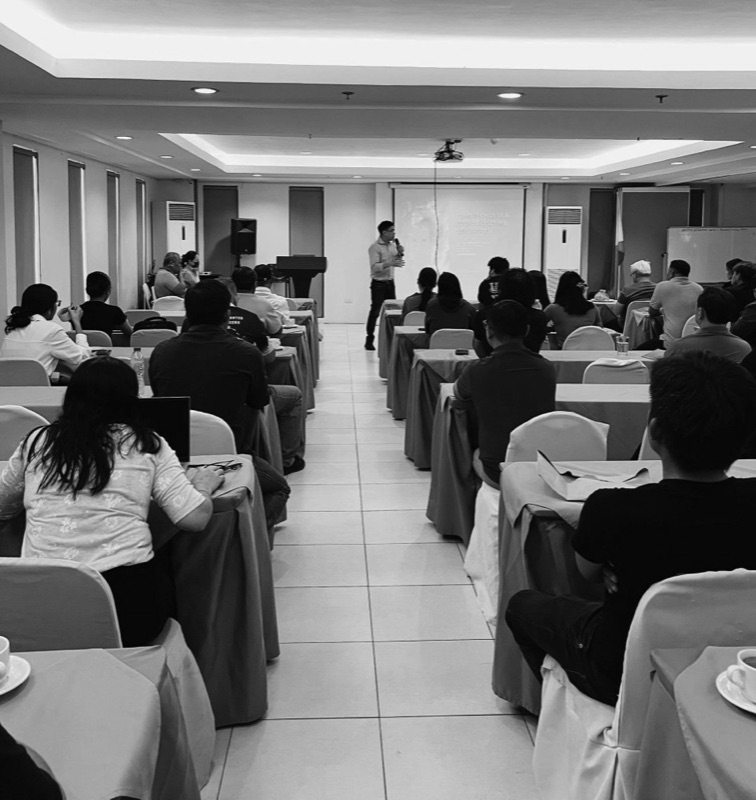
For owners and for ops, quality, HR and shared-services leads at growing BPOs, manufacturers, service businesses and hospitals. In Cebu, elsewhere in the Philippines, or anywhere on a video call.
What changes
Trace recurring errors and escalations to the step that creates them, then fix that step, so the same problem stops appearing in every monthly report.
Agree on what “good” means to your customer, in measures your team can actually track, instead of a quality score nobody trusts.
Find where work gets checked, rechecked and redone, and redesign the handoffs so it’s right the first time far more often.
Get the process ready for more volume before the volume arrives, so growth adds capacity instead of chaos.
Build an operation that doesn’t need you on every thread: clear owners, simple standards, and fewer decisions waiting in your inbox.
Apply AI to the parts of the process that are clear enough for it, and keep it away from the parts that aren’t there yet.
Three ways I work with teams
01
I run the hard conversations so you can take part in them instead of chairing them. Priority-setting sessions that end with fewer priorities, workshops that get stakeholders to one decision, and improvement projects facilitated end to end.
02
We map one process as it really runs, find where it leaks, and rebuild it with the people who do the work. Measured before and after, standardised once it works, and handed over with a simple control plan so the gains stay.
03
Practical, not hype. We look at where AI genuinely helps, such as drafting process maps, summarising root-cause data or handling repetitive checks, and where a clear process beats a clever tool. The process comes first. The tool comes second.
Automating a broken process only helps you make the same mistake faster. Fix the process first, then decide what to automate.
Belts, workshops, talks
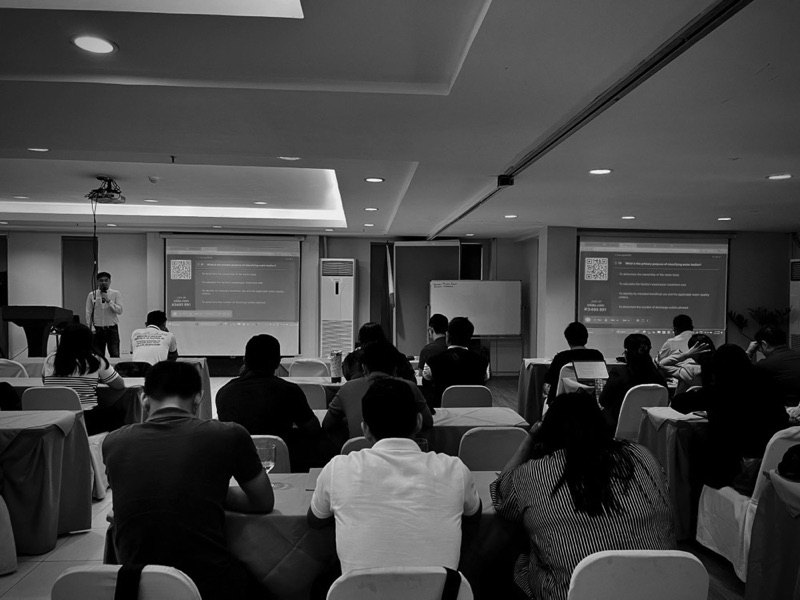
Training is useful when it’s the answer, not the default. When it is, I build it around your real processes, so people leave having solved a problem, not just passed a test.
What changes
Give your team one shared way to describe problems, so meetings move from opinions to evidence.
Use your own processes as the case study, so the training produces something useful before it ends.
Shift the reflex from “Who made the mistake?” to “What in the process allowed it?”
Match the depth of training to each role, and spend the budget where it changes something.
Follow-up check-ins after the course, so the tools are still in use months after the course ends.
Four formats
01
For whole teams. Your people learn to map processes, spot waste such as waiting, duplication and rework, investigate root causes before choosing fixes, and structure problem-solving with DMAIC. Every exercise uses your own work.
02
For the people who will lead improvement projects. Each participant works on a live problem from your operation, so the course ends with a documented improvement project, not just an exam.
03
Focused sessions for teams and leadership groups: root-cause thinking, process mapping, building a quality culture, and Lean Six Sigma + AI. Practical enough to use the next morning.
04
On clarity, work design and calm performance, without hype. Past stages include the PIChE National Convention and the Growth Summit.
“Focus on what mattered most”
“Hosting an international summit involves balancing the diverse needs and priorities of multiple stakeholders. Jodl skillfully guided our strategy session, helping us distinguish essential requirements from nice-to-haves and focus on what mattered most.”
Not everyone needs a belt. Everyone needs to know how to ask why, and what to do with the answer.
1:1 Clarity Conversations

Not every problem belongs to a team. If you’re a professional or freelancer who feels busy, stuck or misaligned, a Clarity Conversation is a structured session to think it through with someone who untangles work for a living.
Best for career transitions, big decisions, work redesign, freelancers building a business that doesn’t depend on their memory, and the recalibration moments in between.
What changes
Stop circling the same decision. Lay it out, test the options honestly, and leave with a next step you can take this week.
Separate what actually matters from what’s merely loud, and give yourself permission to drop the rest.
Apply the tools I use with teams to your own days: fewer open loops, clearer priorities, and time protected on purpose.
Simple processes, templates and a sensible use of AI, so your business runs on a system instead of on you remembering everything.
Thinking about working remotely, or going slowmad? I designed my own work to travel. We’ll pressure-test yours before you buy the ticket.
How it starts For individuals, the Diagnosis is your first Clarity Conversation. Same format, same written summary within 48 hours.
A clearer week changes more than a new life. Start with the decisions you keep postponing.
No hourly rates. No surprises.
I scope every engagement around an outcome and a fixed price agreed before we start, so nobody is watching a meter while we think.
Your written summary becomes the first draft of the scope: the problem, what success looks like, who’s involved, and when it ends.
Every engagement has an end date and a handover. Ongoing support exists, but only if you ask for it.
I don’t disappear and return with a report. Your team does the work with me, which is the reason it lasts.
On-site in Cebu, or online across time zones, including overlap with US hours for teams that serve US clients.
I take on a small number of engagements at once, so you get my attention, not my calendar’s leftovers.
You’ll know the scope, the price and the finish line before we start. The only surprise should be how simple the fix was.
( 06 )
Four questions, honest answers
1 / 4
If you answered yes, this work was designed for you.
If you hesitated on the last one, let’s talk about that first. It matters more than any tool.
If you need certificates handed out quickly, I’m not your person. Happy to point you to someone who is.
The questions people actually ask
The Diagnosis is free. After that, I quote a fixed price for a defined scope, based on the size of the problem, the team and the format. I don’t charge by the hour and I don’t publish a rate card, because a two-day workshop and a process redesign are different things. You’ll have the number in writing before anything starts. The more useful comparison is what the problem already costs you every month.
Both. I’m based in Cebu and happy to be on-site there. Most process work also runs well remotely: we map processes on a shared screen, run workshops online, and I can overlap with your working hours for part of the day.
It depends on the problem, and I’ll give you a real estimate after the Diagnosis, in writing. As a rough guide, a workshop takes a day or two, a single-process redesign takes a few weeks, and in-house belt training runs on a schedule we build around your operations.
No. Nobody needs a belt to start. You need a problem worth solving and someone willing to own it. Training comes in where it helps, at the depth each role actually needs. Not everyone needs to become a Green Belt, and I’ll tell you who does.
It started on factory floors, but the logic works anywhere work passes from one person to the next: tickets, claims, admissions, invoices, onboarding. If your work has steps, it has a process, and a process can be improved.
In-house Yellow and Green Belt training can include assessment and certification. The proposal spells out exactly what’s included before you commit.
After the process makes sense. AI is useful for drafting maps, summarising data and handling repetitive checks. It’s harmful when it automates a step nobody understands. I’ll show you which parts of your process are ready for it, and which aren’t yet.
Then I’ll say so, and you’ll still get the written summary from the Diagnosis. Sometimes the honest answer is “you don’t need a consultant, you need to redesign this one form.” I’d rather tell you that than sell you a project.
No brief or budget needed
Leave with its root cause and a clear view of what fixes it.