Before Building a Quality Program, a Growing BPO Should Ask These 3 Questions
A quality department is easy to hire. A quality culture has to be designed. Start with three questions.

Growth does strange things to a BPO.
At a hundred people, quality lives in the heads of a few supervisors who know every account by heart. At five hundred, those heads are full. The same mistakes start showing up in different teams, the client scorecard gets a little redder each month, and someone in a leadership meeting finally says it: “We need a quality programme.”
They’re right. But the next move is usually the wrong one. A quality lead gets hired, a few analysts follow, a dashboard appears, and a handful of people are sent to Green Belt training. Six months later there is a lot of activity and not much change.
Before you build anything, ask three questions. They’re simple. They’re also the ones most programmes skip.
1. What does “quality” actually mean to our customer?
Ask five people in your operation to define quality and you’ll get five answers. Accuracy. Speed. Sticking to the script. Hitting the SLA. Not getting escalated.
Now ask your customer. Their answer is usually narrower than any of ours, and more specific. One client may care far more about a claim being right the first time than about how fast it’s handled. Another may forgive a slower reply if the issue is solved in a single contact.
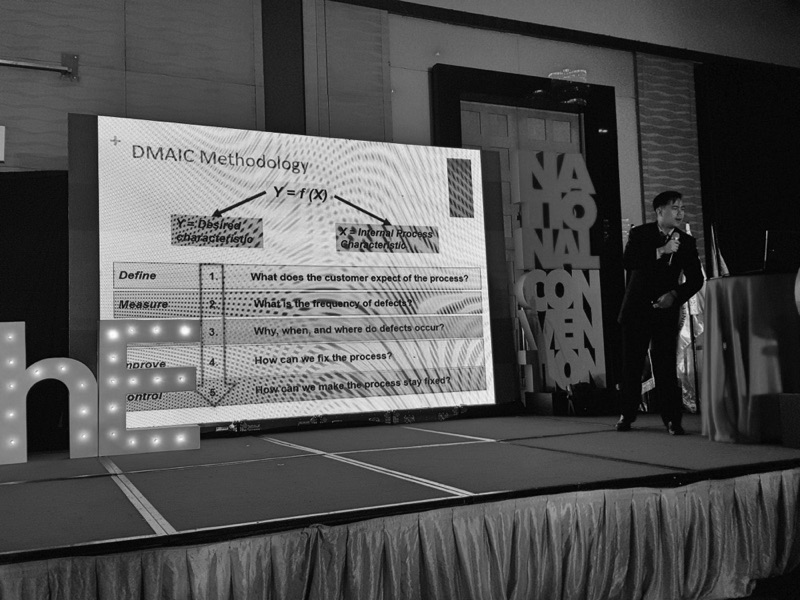
In Lean Six Sigma we call these CTQs: the things that are Critical to Quality from the customer’s point of view. The term matters less than the discipline behind it. If you can’t name what your customer considers good, in words they would recognise, you are still measuring something. You just don’t know whether it’s the right thing.
So start there. Write down the three or four things that matter most to each client, then hold every metric on your dashboard up against that list. Some metrics will survive. Some won’t. Both outcomes are useful.
2. Where does variation enter our processes?
When a hundred agents handle the same type of transaction, you don’t get one process. You get a hundred slightly different versions of it. One agent checks the account history first. Another skips it when the queue is long. A third uses a template from an old account that nobody ever updated.
None of them is being careless. Each one is adapting to a system that allows adaptation. That is variation, and it’s where most quality problems are born.
So when an error shows up, you have a choice between two questions. “Who made the mistake?” Or: “What in the process allowed this mistake to happen?”
One question searches for someone to blame. The other searches for something to improve.
The first feels faster. It produces a name and a coaching log. The second takes longer and produces something far more useful: a fix that stops the next ten people from making the same error. Map the process as it is really done, not as the SOP describes it. Look for the steps where people are forced to guess, remember or improvise. That is where variation gets in.
3. Are we building a Quality Department or a Quality Culture?
A Quality Department is a group of people who check other people’s work. You need one, and it’s easy to hire. But if quality only lives there, every improvement depends on a small team catching problems after they’ve already happened.
A Quality Culture is something else. It’s what you have when the agent, the team lead and the operations manager all ask the same questions without being told to. What does the customer need here? What’s getting in the way? How could this step be better?
You don’t get there by sending everyone to belt training. Not everyone needs to become a Lean Six Sigma Green Belt or Black Belt. Most of your people need a few practical tools and the permission to use them: how to map a process, how to spot waste such as waiting, duplication and rework, how to read a simple Pareto chart to see which problems matter most, and how to keep asking why until they reach a root cause. A smaller group, your future improvement leads, can go deeper into DMAIC, dashboards and control plans.
The goal isn’t a certificate on the wall. It’s a floor where people notice problems early and know what to do about them.
Build the capability before you need it
The worst time to build a quality culture is in the middle of a crisis, when a major client is unhappy and everyone is in recovery mode. The best time is now, while you’re still growing and the habits are still forming.
A quality programme isn’t a collection of tools. It’s an organisational habit of repeatedly asking: What matters to our customer? What prevents us from delivering it consistently? And how can we make the process better?
Ask those three questions before you hire, before you buy software, and before you book the training. The answers will tell you what to build. Just as usefully, they’ll tell you what not to.
First published on LSSE. Revised for this site.